Showing posts with label Skye. Show all posts

Friday, 29 July 2011

Skye, Raasay and Rona

P1000970P1000968P1000964P1000959P1000955P1000948
P1000930P1000944P1000958P1000978P6300783
P6300782P6290740P6290741P6290725P6290726
P6290737
Skye, Raasay and Rona, a set on Flickr.

A visit to Rona would not be complete without a walk over the hill from the beautiful anchorage of Acarsaid Mor to the east coast of the island and Church (or Giant's) Cave.  Before Rona's Church was built in 1878. islanders worshipped in this cavern and used it to celebrate weddings and baptisms.  Beyond the large Gothic-like archway, the cave opens out to reveal its intriguing contents.  Rows of stones span the width of the cave; these were used as pews for the congregation. A low stone pillar was used as a pulpit and beside it a hollowed out stone, fed naturally by drips of water from the cave roof, served as a font.  The views from the Cave across to Applecross  are magnificent. 


On Raasay, a wander along Calum's Road was in order. You can read about this remarkable project, the achievement of local islander Calum Macleod, on the community website:
http://www.raasay.com/RaasayBooks-CalumsRoad.html

Wednesday, 22 June 2011

Potholing Adventures on Skye

In June we paid a visit to Spar Cave on the Strathaird Peninsula on Skye. Settled conditions allowed us to anchor off the narrow inlet which hid the entrance and excitement built as our intrepid crew headed ashore in the tender, headtorches at the ready to explore the Cave's hidden depths. 


 In the 18th Century, the Cave had been a fashionable destination for well-heeled Victorian tourists, drawn north to the area by Sir Walter Scott's poem “The Lord of the Isles” in which he wrote of a mermaid who 'bathes her limbs in sunless well, deep in Strathaird's enchanted cell... where dazzling spars gleam like a firmament of stars'.

The “spars” referred to in the poem, gave the Cave its popular name, but its true Gaelic title is Slochd Altrimen, or Nursing Cave. This dates from the ninth century when a local princess fell in love with the son of the chief of Colonsay who was shipwrecked on the Strathaird coast. Unfortunately the fathers of the young lovers were sworn enemies and when she gave birth to a child, the baby was concealed in the cave to ensure its survival until the feud was settled.

As we approached the Cave entrance we passed the moss covered remains of the wall built by one-time landowner, Alexander MacAllister, to keep out the unwelcome Victorian visitors. It was eventually destroyed by cannon fire from a disgruntled passing sailor.   

Once inside the cave, our head torches lit up the glistening, marble-like Spar or Flowstone (Calcium Carbonate) which covered the surfaces and the huge columns formed by centuries of water dripping through the limestone. Once upon a time stalactites hung from the high ceiling, but these were taken as souvenirs by the aforementioned Victorian sightseers.  The staining from their candles and torches can still be seen on the roof.  


After a nerve racking scramble up the steep flowstone staircase, which despite initial qualms had surprisingly good grip, we marvelled at the strange rock formations and watery pools which emerged from the darkness around us. The floor levels out at the top of the staircase to descend a short while later to the deep pool featured in Scott’s poem.  This marks the end of the cave. We didn't linger much longer – time, tide (and torch batteries) wait for no man - so we formed an orderly (well, there were a few shrieks resulting from the water dripping down our necks) queue and went backwards (literally) down the staircase.  


As we emerged, from this secret underground world, blinking in the late afternoon sunshine, we were surprised to see that the world was as we had left it.  Filled with a real spirit of adventure, we made our way back to Moonshadow with magical images of swimming mermaids in sparkling pools filling our thoughts. 


Share this adventure with us in the following video:


Tuesday, 31 August 2010

Skye, Raasay and the Small Isles

Following a lively sail round Ardnamurchan, we took the tide through the narrows at Kylerhea, then stopped off at Kyle of Lochalsh, before continuing north.     
      
We have just enough clearance to make it underneath the Skye Bridge safely!

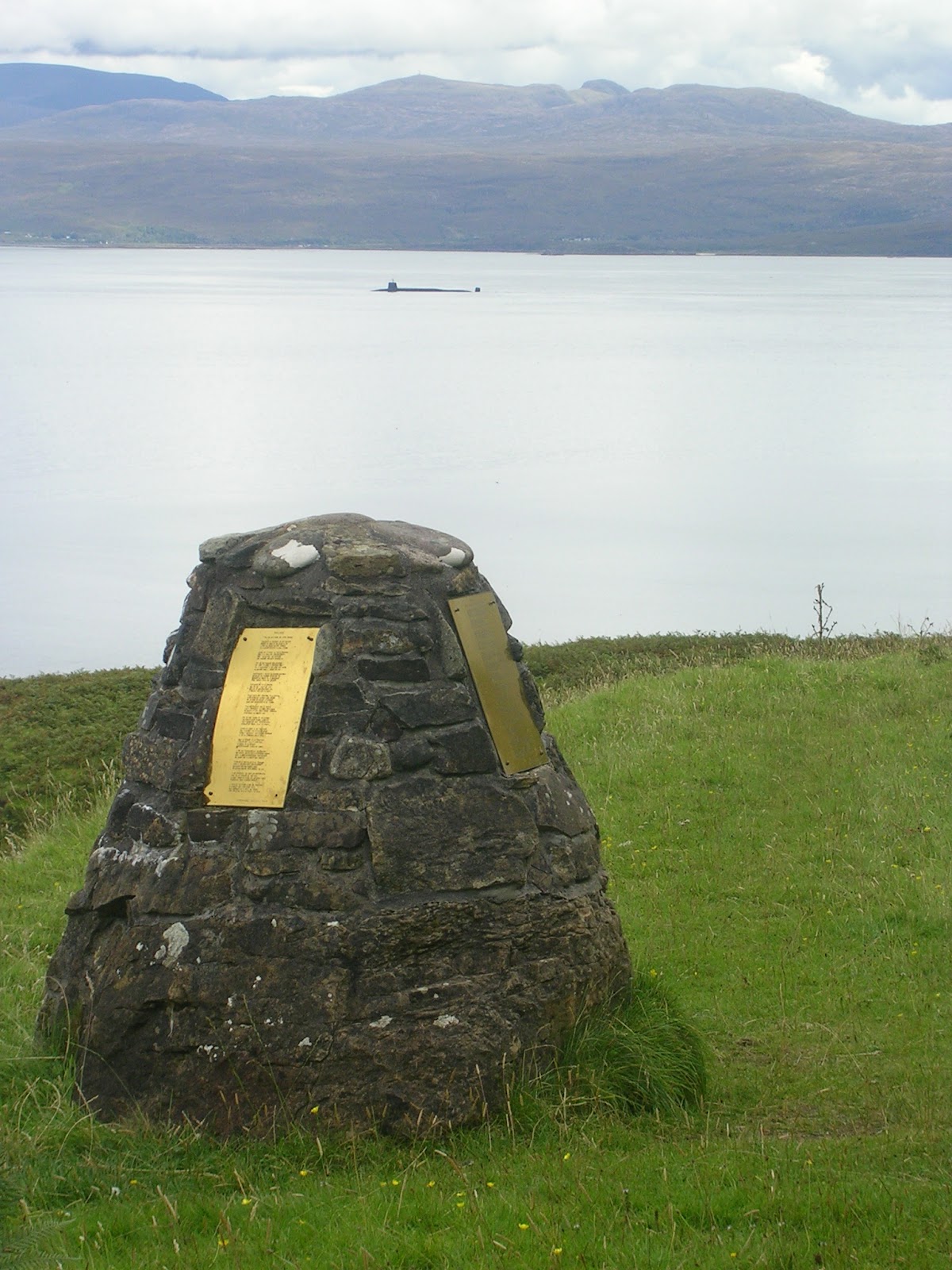
Arriving at Raasay, we anchored off the island's south east coast for a visit to Hallaig - where the deserted ruins of this Highland Clearance site are still visible. The township was made famous in Sorley Maclean's poem "Hallaig" , which evokes the heartbreak and desolation of the Clearances.                                                                                                                                                                       

A cairn memorial to Sorley Maclean,  inscribed with a copy of the poem, in both Gaelic and English stands on the hillside below Hallaig. A submarine plying its way down the Inner Sound is just visible above the monument.    

                                         
More submarine activity in the Inner Sound


The island of Soay lies off the south west coast of Skye.  In 1946, the  author Gavin Maxwell bought the island and established a factory to process shark oil from basking sharks. The old buildings and machinery are still standing. The enterprise was unsuccessful and lasted just three years. Maxwell's book Harpoon at a Venture tells the story.
Soay - Gavin Maxwell's shark station


Shark station machinery, Soay

An overnight stop in Canna gave us the chance to explore ashore. Canna was left to the National Trust for Scotland by its previous owner the Gaelic scholar and folklorist John Lorne Campbell and is now run as a farm and conservation area. The island is a haven for birdlife, with golden eagles, sea eagles and puffins often seen.


On Rum, Moonshadow's guests enjoyed a tour of Kinloch Castle on Rum.  The castle was built as a private residence for Sir George Bullough a textile tycoon from Lancashire whose father bought the isle as his summer residence. Construction began in 1897, and was finished in 1900. The highlight of the tour was the under stairs Orchestrion, a mechanical music system which still functions today and amazed us with its melodic sounds!


Sunday, 22 August 2010

Over the Sea to Scavaig

Moonshadow’s bow dipped and rose through a sun spangled sea as we crossed the Sound of Sleat under full sail.  We were heading for Loch Scavaig on the Isle of Skye and relishing a warm southerly breeze.

The night before had been spent in Inverie, Loch Nevis, where we met up with old friends and made some new as the crew was treated to the usual hospitality and musical entertainment at Britain’s remotest mainland pub the Old Forge Inn.

Sunshine on Loch Nevis
Pleasant memories of the previous evening lingered as the sea spray licked our skin making it salty to the taste. As we rounded the Point of Sleat, we eased our sheets and bore away. Over our shoulders the high hills of Rum and the sugar loaf Sgurr of Eigg shimmered in the distance.

The Black Cuillin


Approaching Scavaig, the dramatic horseshoe arc of the Cuillin skyline rose up to meet us and as we slipped past the resident seal colony we were close enough to hear their snorts and gaze into their mournful brown eyes.  
  
We were coming into the inner anchorage at the bottom of the tide, feeling our way round the bay. The water was crystal clear – and with only a few inches under the keel it looked too close for comfort – but the skipper had calculated correctly and the echo sounder soon inched its way upwards.


Hidden within this rugged landscape, and completely invisible to the outside world, is Loch Coruisk.   With dinner preparations underway, guests were ferried ashore to enjoy the short walk to this hidden jewel and rewarded with stunning views of the impressive rock strewn amphitheatre and a magical sense of peace and tranquility.  That night, under a star studded sky, a bright moon flooded the anchorage with light, casting eerie shadows over Moonshadow’s solitary mast.  

The following morning dawned bright and clear and following breakfast on deck in the warm sunshine, we weighed anchor, already anticipating the pleasures which lay ahead.